


Cuba is facing one of the most severe crises in its modern history. A dramatic shortage of oil, combined with mounting pressure from the United States, has pushed the Caribbean nation toward economic paralysis and growing social unrest. With fuel reserves nearly exhausted, repeated nationwide blackouts, and shortages affecting nearly every sector of daily life, the island’s future has become increasingly uncertain.
The situation escalated sharply in 2026 after the sudden collapse of political support from Venezuela, Cuba’s longtime economic lifeline. For more than two decades, Venezuela supplied Havana with heavily subsidized oil that allowed the Cuban government to maintain its energy grid, transportation system, and state-controlled economy. At the height of this alliance, Venezuela reportedly shipped over 100,000 barrels of oil per day to the island.
That arrangement began under former Venezuelan President Hugo Chávez, who formed a close ideological alliance with Fidel Castro after taking power in 1999. Even after Chávez’s death in 2013, Nicolás Maduro continued to support Cuba despite Venezuela’s own economic decline. However, after Maduro’s capture by US Special Forces earlier this year, the relationship abruptly collapsed. Oil shipments stopped almost overnight, leaving Cuba without its primary energy supplier.
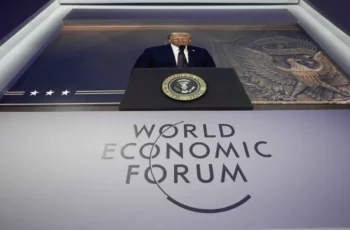
At the same time, the United States intensified economic pressure on Havana. President Donald Trump and Secretary of State Marco Rubio have repeatedly stated that sanctions and restrictions are intended to force political change in Cuba. Washington also warned other nations against supplying oil to the island, threatening punitive tariffs or diplomatic consequences for countries that attempted to bypass the blockade.
As a result, Cuba entered a full-scale energy emergency.
In May, Cuban Energy Minister Vicente de la O Levy admitted that the country had completely run out of the diesel and fuel oil needed to operate many of its power plants. The announcement confirmed what ordinary Cubans had already been experiencing for months: rolling blackouts, fuel rationing, transportation disruptions, and shortages of basic goods.
Across the island, daily life has become increasingly difficult. Electricity outages now last for hours in many cities, sometimes affecting entire regions simultaneously. Public transportation has been reduced, businesses struggle to operate, and gasoline stations often stand empty. The tourism industry — one of Cuba’s few major sources of foreign currency — has also been severely damaged. Some tourist resorts have reportedly been closed temporarily, while airlines have been warned that refueling services may not always be available.
The crisis has also fueled growing public frustration. Although Cuba has long maintained tight political control, reports of sporadic protests have emerged in several parts of the country. In the city of Morón, demonstrators reportedly threw rocks and set fire to a local Communist Party office. Social media platforms have become an outlet for citizens documenting shortages, blackouts, and declining living conditions.
The humanitarian situation is becoming increasingly alarming. The United Nations has warned that the fuel blockade is preventing the Cuban government from delivering food and essential supplies to vulnerable populations. Hospitals, schools, and public institutions are struggling to function under worsening conditions.
Several countries, including China, Brazil, and Mexico, have offered humanitarian assistance or food aid. Russia also sent a tanker carrying approximately 730,000 barrels of oil in late March. The shipment temporarily eased blackouts and allowed Cuba to stabilize parts of its electrical grid for a short period. However, the oil was reportedly exhausted by early April, and no comparable deliveries have arrived since then.
Experts note that Cuba requires roughly 100,000 barrels of oil per day to sustain normal operations. Without a steady supply, temporary relief measures are unlikely to prevent further deterioration.
For the Trump administration, the crisis represents an opportunity to achieve a long-standing political objective. Since the Cuban Revolution of 1959, successive US administrations have attempted to weaken or remove the communist government in Havana through sanctions, diplomatic isolation, and political pressure. However, many analysts believe the current campaign is among the most aggressive in decades.
Secretary of State Marco Rubio has played a particularly influential role in shaping US policy toward Cuba. As the son of Cuban immigrants in Florida, Rubio has consistently advocated a hardline approach against the Cuban government. The Cuban-American community in South Florida remains an important political force, and support for regime change in Havana continues to resonate strongly among many voters there.
Beyond domestic politics, Washington also sees Cuba as a strategic concern because of its relationships with geopolitical rivals such as China, Russia, and Iran. Some US officials argue that weakening the Cuban government could reduce the influence of those countries in the Western Hemisphere.
Yet the strategy carries significant risks.
One of the greatest concerns is the possibility of a massive migration wave toward the United States. Cuba has already experienced a historic population decline in recent years. According to Cuban demographer Juan Carlos Albizu-Campos, the island has lost more than 2.75 million people since 2020 as citizens fled economic hardship and political uncertainty.
If the Cuban government collapses completely, the resulting humanitarian disaster could trigger another major exodus similar to the Mariel boatlift of 1980, when more than 125,000 Cubans arrived in Florida within a few months. A larger collapse today could destabilize not only Cuba, but also neighboring Caribbean and Latin American countries struggling to manage migration and economic instability.
There are also broader geopolitical implications. China and Russia have historically viewed Cuba as an important ideological and strategic ally in the region. A sudden collapse of the Cuban government could reshape regional alliances and increase tensions between major global powers.
Amid the growing crisis, reports of negotiations between US and Cuban officials have emerged. In March, the Cuban government acknowledged that discussions were taking place with representatives from Washington. According to reports, talks have involved several influential Cuban figures, including Raúl Guillermo Rodríguez Castro, grandson of former President Raúl Castro and a figure believed to have ties to Cuba’s powerful military-run business conglomerate, GAESA.
CIA Director John Ratcliffe reportedly visited the island in May for high-level meetings as frustration grew over the lack of progress. Meanwhile, Cuba has attempted to signal a willingness to reform. The government has released some political prisoners and announced measures allowing Cubans living abroad to invest in local businesses — a major shift for the traditionally state-controlled economy. Authorities have also allowed private companies to import their own fuel supplies.
However, US officials insist that these measures are insufficient. Rubio has argued that cosmetic reforms will not resolve the crisis and has stated that meaningful change requires “new people in charge”.
























Comments