


The 56th Annual Meeting of the World Economic Forum in Davos (19–23 January 2026) unfolded against a backdrop of mounting geopolitical strain between the United States and the European Union. What was traditionally a venue for global cooperation became, this year, a stage for transatlantic recrimination, strategic recalibration, and diplomatic brinkmanship – with implications for trade, security, and long-standing Western alliances.
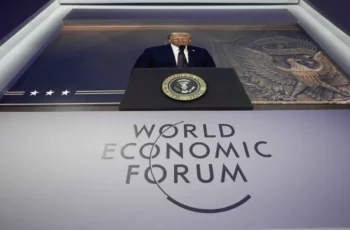
At the center of the drama was U.S. President Donald J. Trump, whose starkly confrontational rhetoric and policy proposals dominated the agenda and, in many instances, disrupted planned cooperation between the U.S. and EU leadership. European leaders, for their part, responded with a mixture of resistance, strategic autonomy initiatives, and tactical concessions, underscoring a widening divergence in transatlantic priorities.
The Davos gathering was expected to be dominated by shared concerns such as economic growth, climate change, and innovation. Yet, instead, the relationship between the United States and the European Union found itself in an unprecedented moment of friction – a theme that reverberated through panel discussions, private meetings, and press conferences alike.
A central flashpoint was the controversy over Greenland’s status and related U.S. ambitions, which sparked diplomatic ire across the EU. Trump’s repeated assertions of having the “right, title and ownership” over Greenland and linked threats of tariffs against European states galvanized an unusually unified European response. EU leaders publicly affirmed Greenland’s place within Danish sovereignty and countered tariff threats, signaling a growing impatience with U.S. unilateralism.
In a rare policy reversal after intense backlash, the Trump administration rescinded threats of new tariffs on several EU countries – a move that facilitated the temporary suspension, for six months, of a €93 billion EU retaliatory trade package that had been slated to take effect early next month. This suggests a tactical de-escalation, but one driven not by cooperative momentum but by diplomatic necessity.
“All this shows that you cannot let the Americans trample all over the Europeans,” said a European Union official about U.S. ties.
“We did the right thing to push back, to be firm in what we said, but it is not over. My sense is that we will be tested constantly on issues like this,” the official told Reuters.
European Commission President Ursula von der Leyen announced that the EU is developing a comprehensive Arctic security strategy, which includes plans to invest in icebreaker capability, infrastructure, and defense cooperation around Greenland. Her remarks underscored European intentions to take a more active role in its own security architecture rather than relying exclusively on U.S. leadership.
Leaders from Brussels to Paris have also used the Davos platform to signal that the traditional model of transatlantic relations “no longer works” and that the EU must pursue greater autonomy in economic and security affairs. According to European diplomatic sources, there was consensus among EU member states that the transatlantic partnership has hit a structural break – a moment that some commentators have described as a Rubicon moment for Europe’s geopolitical orientation.
This strategic recalibration does not amount to a pivot towards China or a rejection of partnership with the U.S., but it does reflect a pragmatic shift: Europe is seeking diversified alliances and greater control over its own defense and economic levers.
At the heart of the U.S. – EU narrative in Davos was Greenland – a geographically remote territory that became symbolic of much larger debates.
Trump’s early assertions around Greenland’s sovereignty raised alarm across Europe and were widely perceived as a test of NATO cohesion and European resolve. While the White House later agreed to a framework deal with NATO emphasizing Arctic security cooperation and dropped the most aggressive tariff threats, the incident itself exposed vulnerabilities in transatlantic trust and raised doubts about the stability of traditional alliances.
Whether framed as a diplomatic misfire or a negotiating gambit, the Greenland episode triggered renewed conversations in Brussels about defense autonomy and economic sovereignty, especially given broader concerns over global supply chains and strategic technological competition.
So, Europe’s push for diversification in trade and defense is not aimed at abandoning the transatlantic alliance but at recalibrating it – ensuring that European interests aren’t subordinated to unilateral decisions emanating from Washington. The strategic emphasis is clear: Europe seeks to remain a credible geopolitical actor in its own right.
The U.S.- EU interaction at Davos 2026 was, above all, a defining moment in transatlantic relations. It revealed the fragility of long-standing diplomatic norms, the impact of domestic political currents on foreign policy, and the willingness of European leaders to rethink traditional alignments.
Rather than heralding a definitive “break up,” the events in Davos suggest that the transatlantic partnership is undergoing strategic transformation. The contours of this transformation are still being negotiated – and the outcome will shape global politics, economic integration, and security cooperation for years to come.

























Comments