


For most politicians and journalists, power is something to be looked up at. Not toward the sky, but toward the summit of institutions: presidents, prime ministers, party leaders, CEOs. Politics is framed as a story of who leads, who follows, and which figure at the top sets the direction. The language reflects this obsession. “Leader” and “leadership” dominate headlines, reinforcing the idea that history is made almost exclusively by those at the apex of authority.
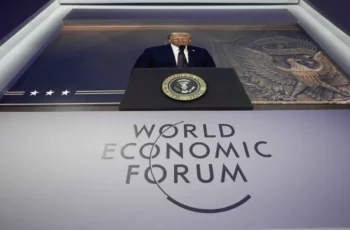
This fixation narrows how we understand the world. Global events become personal dramas: Davos is reduced to a gathering of powerful individuals rather than a system of wealth and influence; foreign visits are interpreted as clashes of titans; even local elections are filtered through the ambitions of party leaderships. The result is a political imagination that struggles to see power anywhere except at the top. Yet moments arise that puncture this worldview. The events in Minneapolis over the past months are one such moment. They remind us that power does not belong solely to those who wield office, uniforms, or money. It can also emerge from below, from ordinary people acting collectively, often without titles, recognition, or institutional backing.
The Trump administration did not expect resistance from a midwestern city with fewer residents than many London boroughs. Yet sustained, nonviolent opposition by Minnesotans has thrown its immigration agenda into disarray. After months of local pressure, the president’s immigration chief in the city, Gregory Bovino, was forced out. The secretary of homeland security, Kristi Noem, now faces calls for removal. Infighting has erupted within the administration, and public support for the aggressive federal immigration tactics has fallen sharply nationwide.
Crucially, none of this was driven by conventional leaders. On the contrary, political elites largely failed. In Washington, key Democrats crossed party lines to fund the very immigration crackdown their voters opposed. Corporate leaders, university presidents, major law firms and media conglomerates largely acquiesced, intimidated by a familiar mix of threats and inducements. Even many critics of Trump chose silence or caution.
Minneapolis responded differently. Week after week, tens of thousands of residents took to the streets, even in brutal winter conditions. Protesters returned despite teargas, beatings and intimidation. When targeted neighbours went into hiding, others organised food deliveries and medical support.
Volunteers became ICE-watchers, documenting abuses with phone cameras. Restaurants doubled as field hospitals. Informal networks trained newcomers, shared information and coordinated aid. This resistance came at an appalling cost. Two ordinary residents, Renee Good and Alex Pretti, were killed by federal agents under disputed circumstances, then publicly smeared as “domestic terrorists”. Their deaths shocked the community but did not break it. Instead, they hardened a sense of shared responsibility and moral urgency.
The administration and its allies attempted to reframe this civic mobilisation as an “illegal insurgency”. The language was revealing. It exposed how threatening organised solidarity can appear to those accustomed to command flowing only from above. Yet the reality on the ground was starkly different: parents blowing whistles, neighbours holding cameras, volunteers delivering groceries, all confronting heavily armed, masked agents backed by state power.
The roots of this resistance run deep. South Minneapolis was last a global headline six years ago, when George Floyd was murdered by police. Networks formed during the Black Lives Matter protests were reactivated, carrying lessons about mutual aid, documentation and collective courage. Minnesota’s high levels of social trust also mattered. In a society where people are more inclined to trust their neighbours than distant authorities, horizontal organisation comes more naturally.
Historians have long recognised this phenomenon. The scholar Moshik Temkin describes it as “leadership from below”: moments when societies under pressure turn not to charismatic figures at the top, but to individuals and groups with no formal power. Such leaders may never be named, may never even see themselves as leaders. Their influence lies not in command, but in example. This kind of leadership is fragile and often temporary, but it can be transformative. It reshapes what people believe is possible. Against a politics that thrives on fear, ethnic division and spectacle, the Minneapolis protests offered a counter-image: solidarity rooted in everyday life. Not ideology imposed from above, but neighbourliness practiced under fire.
The struggle is far from over. Federal agents remain active. Replacements for disgraced officials bring little reassurance. Intimidation continues. Yet something has already shifted. After a year in which many commentators spoke of a new political “orthodoxy” and an unstoppable authoritarian momentum, Minneapolis demonstrates that such narratives are never final.
History, as E.H. Carr reminded us, is always written from the present. Its meaning is not fixed by presidents alone, but contested by those who live through events and act within them. The people of Minneapolis have inserted themselves into that story, not as footnotes to power, but as protagonists of a different kind.
Their example suggests a broader lesson. When institutions fail, when elites conform, when leadership at the top becomes destructive, societies are not powerless. They can generate their own forms of leadership, grounded not in hierarchy, but in courage, cooperation and care.

























Comments