


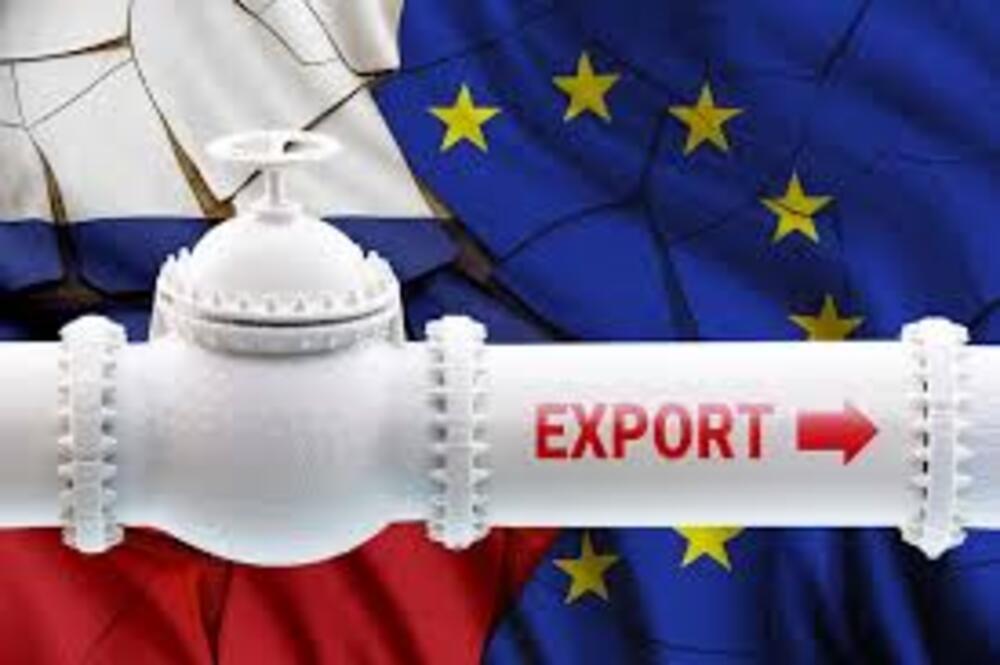
After the start of the Special Military Operation in Ukraine, as well as within the framework of a strategy to contain Russia and inflict a strategic defeat on it, including military-economic and financial support for Kyiv and increasing sanctions pressure on Moscow (a new 20th sanctions package is now being considered), the European Union announced a complete refusal to import Russian gas, both pipeline and LNG, in 2027. Thus, according to the final decision of the EU Council, from January 1, 2027, a ban on the import of Russian LNG and pipeline gas comes into effect from September 30, 2027. Currently, after the explosion in 2022 in the Baltic Sea of three of the four lines of the Nord Stream pipeline, the cessation of transit through Ukraine and the shutdown of the Yamal-Europe gas pipeline through Poland, only Turkish Stream with a design capacity of 15.75 billion cubic meters per year is currently responsible for pipeline supplies to Europe. First of all, Hungary, Slovakia and Serbia receive this Russian gas.
The decision by the European Commission and the European Parliament to completely stop importing Russian gas goes beyond the EU’s traditional energy policy, which Slovak Prime Minister Robert Fico called “ideological stupidity and energy suicide.” At a time when Europe is faced with rising living costs, a slowdown in the pace of industrial development and global technological competition, the cessation of long-term supplies of Russian gas is becoming the main test of the European economy for stability. At the same time, the inclusion of a special “suspension clause” in the text of the EU Council Regulation, i.e. on the temporary return of imports in the event that one of the EU states faces emergency problems in the field of gas supply, suggests that the European political elite is still aware of the potential negative consequences of this ban and has provided for the use of the “braking mechanism” in advance.
Brussels’ political explanation for the ban on Russian gas is presented as a threat to the energy security of the European Union and the goal is set, according to the President of the European Commission Ursula von der Leyen, to achieve “complete energy independence” from Russia and contribute to the “emptying of Putin’s military treasury.”
The acute energy crisis that has engulfed Europe has primarily affected industry. Thus, gas consumption in the industrial sector has been continuously decreasing and has reached 17% compared to the normal level. Chemicals, fertilizer, glass, aluminum and paper are all segments that thrived on cheap Russian gas and are now forced to operate in the face of increased energy costs. According to the forecasts of international experts, the energy “shock” from the restriction of gas supplies from Russia by 2027 will “eat” about one percent of the industrial growth of the eurozone, or about 200 billion euros per year. Gas and electricity in Europe remain twice or even three times more expensive than in the United States or the Middle East, putting energy-intensive industries in a difficult position and leading to the deindustrialization of Europe. Investments and new capacity are increasingly going to the United States, China and Asian countries, where energy resources are cheaper, environmental standards are lower, and state support is more substantial, and, thus, a significant part of production may soon leave Europe forever.
The United States first of all took advantage of the severance of energy ties between Europe and Russia, turning into the main supplier of LNG to the European market in a short period. Thus, the share of American LNG in Europe at the end of 2025 is over 60% of all European LNG imports. At the same time, these deliveries are by no means some kind of gesture of American charity. The United States significantly inflates the price of its LNG, thereby increasing the cost of energy resources both for European consumers as a whole and for industry. For Washington, this is a double benefit. On the one hand, the American gas industry received a guaranteed solvent market for its supplies in the long term, and on the other hand, the geopolitical goal of eliminating Europe’s dependence on Russian energy carriers was achieved. By eliminating the Russian competitor, the United States has made Europe dependent on American LNG terminals and gas carriers. Thus, the break with Moscow did not bring Europe the long-awaited energy independence, but turned into an economically more costly dependence on American and Qatari LNG supplies for the EU’s energy security. Thus, in connection with the start of the military operation of the United States and Israel against Iran and the closure of the Strait of Hormuz on March 3 of this year, the cost of April futures on the European gas market immediately increased by 45% and reached 780 AM. dollars. per 1000 cubic meters of LNG.
In the event of a further escalation of the military conflict in the Persian Gulf, the cost of gas may exceed 90 euros or more per MWh.
Rising imports from the US now represent a strategic vulnerability in Europe. In the event of an escalation of the trade war, when the energy sector is drawn into tariff policy and export restrictions arise, Europe will simply exchange one form of dependence for another. At the same time, if there is an urgent need to diversify energy sources for the European Union, their choice will not be so large and profitable.
Thus, the current structure of pipeline gas supplies to the EU at the end of 2025 – beginning of 2026 is as follows: Norway accounts for more than 50% of natural gas supplies to Europe. However, its aging offshore fields face their own geological limitations. Algeria continues to be a significant exporter of gas (15%-19% of supplies), having already established infrastructure in Southern Europe, although for a long time production in this country was constrained by investment uncertainty. The UK accounts for 13.4% of supplies, Russia 8% and Azerbaijan 7%.
For Russia, the loss of the country’s traditional European gas market was a sensitive blow, given its export-oriented energy trade in this area and convenient logistics. For several decades, Gazprom earned tens of billions of dollars a year from the sale of gas to the European Union, and these funds financed the Russian budget. So, as of 2021, before the start of the NWO, Russia supplied 157 billion cubic meters of gas per year to the EU, which was 43% of all European imports, and already in 2024 Russia’s share fell by more than half and amounted to 18.3%. Currently, Russian gas is supplied to Europe through a single route through the Turkish Stream in the amount of about 16 billion cubic meters, and the export of Russian LNG to the European Union in the amount of about 20 billion cubic meters continues, primarily to Spain, Belgium, France and Portugal, which have the appropriate port infrastructure for receiving LNG.
After a significant reduction in Russian gas supplies to Europe, Gazprom’s revenues fell sharply and the company moved from record profits to operating at a loss. In March last year, Gazprom reported its record loss under RAS (Russian Accounting Standards) in 2024 of 1.076 trillion rubles. The value of Gazprom’s shares fell significantly and layoffs began among the employees of its central office.
Russia manages to compensate for European losses only partially due to the growth of supplies to the East, primarily by increasing pumping through the Power of Siberia gas pipeline to China by 25% from 31 to 39 billion cubic meters, which reached its design capacity last year.
In 2025, Moscow managed to agree with Beijing on the design of the Power of Siberia-2 gas pipeline with a design capacity of 50 billion cubic meters. The route of this main gas pipeline with a total length of 6,700 km (2,700 km through Russian territory) should pass from Yamal (Western Siberia) through the Krasnoyarsk Territory through the territory of Mongolia and reach the Xinjiang Uyghur Autonomous Region of China. Thus, after the commissioning of the Power of Siberia-2, the share of Russian pipeline gas in China’s imports may grow from 5% to 20% in the early 1930s.
In 2027, it is planned to commission the so-called Power of Siberia-3 – a connection of the existing Far Eastern gas pipeline Sakhalin-Khabarovsk-Vladivostok (Far Eastern Route) with a capacity of 10 billion cubic meters with the Power of Siberia pipeline. And from 2028, it is planned to increase its capacity to 12 billion cubic meters.
After the entry into force of a complete ban on the import of Russian LNG, domestic suppliers will be able to redirect its volumes to China, where a separate Beihai LNG terminal has been allocated specifically for sanctioned gas. It is obvious that LNG, especially from the sanctioned Arctic LNG-2 in
China will go with a significant discount. The next promising area that can provide Russia with an increase in pipeline gas exports is Central Asia, primarily Uzbekistan. This is a very profitable direction for Gazprom (previously, the company’s management did not pay close attention to this area due to the low margins of such investment projects), since Uzbekistan will need more and more imported gas in the face of growing energy consumption against the backdrop of falling gas production and depletion of its own fields. In 2026, Tashkent plans to increase imports from Russia from 7 billion cubic meters to 11 billion cubic meters. Earlier in 2024, Gazprom signed gas supply contracts with Uzbekistan and Kyrgyzstan valid until 2040.
In this scheme, Kazakhstan acts as a transit country and consumer of gas. The volume of supplies directly to our southern neighbor is 4.5-5 billion cubic meters per year Taking into account the program of gasification of the northern and eastern regions of the republic, in January of this year, Gazprom and Astana signed an agreement to increase the volume of supplies, which can grow to 12 billion cubic meters per year.
A contract is being prepared for the supply of Russian gas to the northern regions of Iran in the amount of 1.8 billion cubic meters annually. According to the Minister of Energy of the Russian Federation S. Tsivilev, the construction of the gas pipeline will take 2-3 years. But all these plans can be adjusted depending on the development of the situation in the military conflict zone in the Persian Gulf.
Thus, for Russia, the southern direction is becoming a promising market for the falling volumes of export gas due to the closure of the European market. At the same time, taking into account the fact that the EU market is premium and it would be possible to earn much more on it than on the Chinese or Central Asian markets, due to the lack of a real alternative, Moscow has to agree to less favorable offers and conditions. For example, the price of supplying 1000 cubic meters of pipeline gas to China is now a quarter cheaper than the same comparable volume of gas supplied to Europe.
Based on the above, we can draw unequivocal conclusions that Moscow, having lost the largest and richest market for its gas in Europe, cannot yet completely redirect gas from the European market to the east in a short time, since the capacity of existing pipelines to China is not yet sufficient, and new gas pipelines are still being designed to try to replace the falling volumes of gas (about 150-180 billion cubic meters per year), which turned out to be unclaimed due to the EU sanctions. Thus, the US and other LNG exporters in the Persian Gulf are acquiring reliable buyers in the EU, and Asia is using cheap Russian energy to further strengthen its own industrial base. The European Union is gradually turning into an expensive and overregulated market with limited industrial opportunities. At the same time, hiding behind the need to strengthen its energy security and actively promoting its militaristic position regarding the armed conflict in Ukraine, the EU leadership mistakenly believes that technology, efficiency and renewable energy sources will compensate the European Union for the lost benefits of cutting off cheap Russian gas supplies.


























Comments