


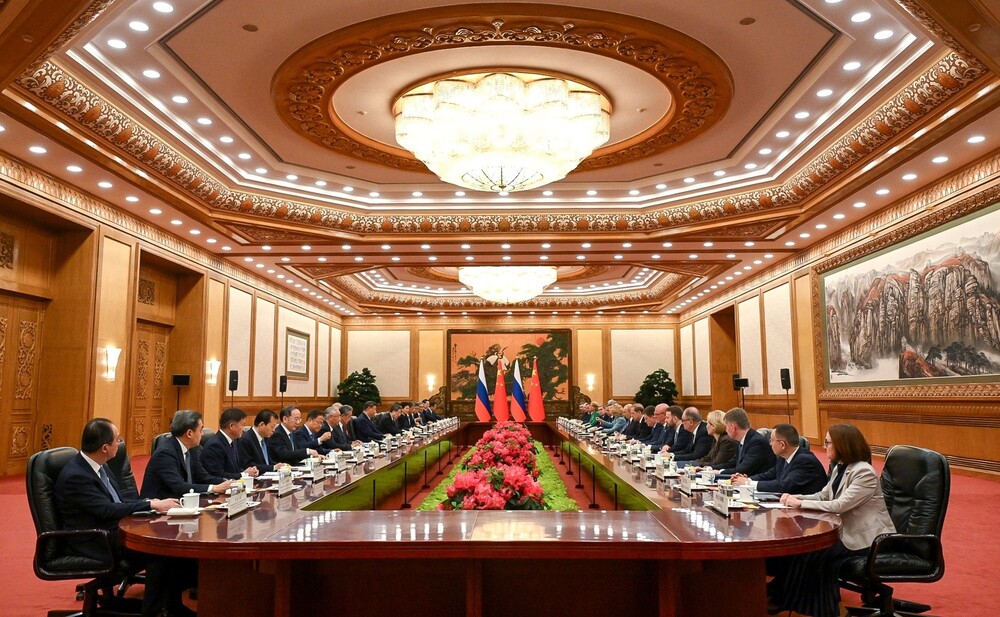
The meeting between Chinese President Xi Jinping and Russian President Vladimir Putin in Beijing this week carried symbolism far beyond diplomacy. Coming only days after US President Donald Trump’s high-profile visit to China, the summit highlighted the increasingly complex balance of global power and demonstrated how Beijing is positioning itself at the center of a rapidly changing international order.
During the talks, Xi and Putin presented a united front politically, economically, and strategically. The two leaders oversaw the signing of more than 40 agreements covering trade, technology, energy, media cooperation, and digital development. They also reaffirmed what both sides described as a historic partnership, emphasizing that relations between China and Russia have reached their strongest point in modern history. For both governments, the summit was about much more than bilateral trade. It was a carefully staged geopolitical message aimed at Washington, Europe, and the wider international community. At a time of growing instability – including war in the Middle East, continuing tensions surrounding Ukraine, and worsening rivalry between China and the United States – Beijing and Moscow are attempting to show that their strategic alignment remains firm despite external pressure.

Energy cooperation stood at the center of the discussions. Putin described the energy sector as the “driving force” behind the economic relationship between the two nations. Russia has increasingly relied on China as a critical economic partner since Western sanctions isolated Moscow after the 2022 invasion of Ukraine. China, meanwhile, has benefited from access to discounted Russian oil and gas supplies while strengthening its own energy security during a period of global uncertainty.
According to Russian officials, oil exports to China rose dramatically during the first quarter of 2026, increasing by approximately 35%. Russia is now among China’s largest suppliers of both crude oil and natural gas. Bilateral trade between the two countries reached roughly $228 billion in 2025, underlining how quickly economic ties have expanded over the last several years.
The ongoing crisis in the Middle East has made this cooperation even more significant. With conflict involving Iran threatening global energy markets and supply routes, both Moscow and Beijing are attempting to portray themselves as stabilizing forces in the international economy. Putin stressed that Russia remains a “reliable supplier” of energy resources, while Xi warned that continued instability could disrupt industrial supply chains and international trade.
China’s public position on the Middle East conflict reflects its broader diplomatic strategy. Beijing officially calls for peace, dialogue, and an immediate end to hostilities, while simultaneously criticizing what it views as American unilateralism. During the summit, Xi once again warned against “hegemonism” and the “law of the jungle,” language widely interpreted as indirect criticism of US foreign policy. These comments illustrate China’s larger effort to present itself as an alternative global leader. Beijing increasingly frames international politics as a struggle between a declining Western-dominated order and a more “multipolar” world in which countries like China and Russia play larger roles. The timing of Putin’s visit – directly after Trump’s trip to Beijing – reinforced that message.

Analysts say the sequence of events allowed Xi to project an image of China as a global power capable of maintaining relationships with competing rivals simultaneously. Hosting both the American and Russian presidents within days demonstrates Beijing’s diplomatic flexibility and strengthens Xi’s domestic standing within the Communist Party.
For Putin, the visit was equally important. Russia continues to face diplomatic isolation from much of Europe and North America because of the Ukraine war. Demonstrating close ties with China helps Moscow show that it still has powerful international allies and access to major markets. The Kremlin particularly values China’s willingness to maintain trade ties despite Western sanctions and criticism.
Although Beijing officially claims neutrality regarding the Ukraine conflict, its actions have often favored Moscow in practice. China has increased trade with Russia, conducted joint military exercises, and continued supplying high-tech components that Western governments believe support Russia’s defense industries. The relationship between the two countries has become one of the defining geopolitical partnerships of the current era.
Still, the alliance is not without limits. One major issue that remains unresolved is the proposed Power of Siberia 2 gas pipeline. Russia has strongly pushed for the project, which would significantly increase natural gas exports to China. However, Beijing has so far shown caution, likely seeking favorable pricing and maintaining leverage over Moscow. The absence of visible progress on the pipeline during the summit suggests that even close strategic partners continue to pursue their own national interests carefully. China’s leadership also faces a delicate balancing act in its relationship with the United States. While Xi openly criticizes American foreign policy, China’s economy remains deeply connected to global trade and Western markets. Beijing does not want direct confrontation with Washington, particularly during a period of slowing economic growth at home.

This explains why China simultaneously strengthens ties with Russia while also maintaining dialogue with the United States. Xi’s strategy appears designed to maximize China’s global influence without becoming trapped in a rigid Cold War-style bloc system.
Personal diplomacy also played a major role during the summit. Xi and Putin repeatedly referred to each other as close friends, continuing a pattern that has become central to their public relationship. Over the years, the two leaders have cultivated an image of mutual trust and ideological alignment. Xi once famously described Putin as his “best and most intimate friend”, while Putin regularly praises their personal rapport.
This relationship serves political purposes for both men domestically. Putin benefits from showing Russians that the country is not isolated internationally despite sanctions and war. Xi, meanwhile, uses these meetings to reinforce his image as a respected global statesman capable of managing relationships with all major powers.


























Comments