


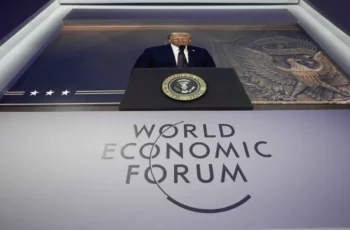
At the G7 in Évian‑les‑Bains, Donald Trump walked in late, announced “I’m the boss!”, and the room laughed. (AP News) ()
Days later, Giorgia Meloni – who had positioned herself as Trump’s favourite European – found herself on the receiving end of a public slap. In an interview with Italy’s La7, Trump said she had “begged” him for a photo: “She wanted it so badly. I wouldn’t have done it, but I felt sorry for her.”
Meloni – the only European leader who travelled to Trump’s 2025 inauguration – shot back on Instagram: “Neither I nor Italy have ever begged.” Her foreign minister, Antonio Tajani, cancelled a planned Washington trip. A close Meloni aide told RaiNews: “Whether by design or incompetence, he is tearing apart the U.S.–Europe relationship.”
The appeasement bet that backfired
Meloni’s approach had been simple: stay close, flatter, never confront. Trump called her “fantastic” and “an inspiration”. Then came the Iran war. Italy refused the U.S. use of the Sigonella airbase. Meloni criticised Trump’s attacks on Pope Leo XIV. Trump’s reply: “I thought she had guts, but I was wrong.” The personal bond dissolved within weeks.
At the G7 itself, Meloni had told journalists that relations were “unchanged” and “without friction”. Reuters filmed her smiling and telling Trump, “We’ve always been friends.” Then he went on TV and called her a beggar.
Political scientist Piero Ignazi (University of Bologna) said Meloni now has to choose: “Either she takes a less accommodating stance, or she goes tougher, like Canada.” The flirtation strategy has run its course.
Europe’s new playbook – and its limits
Other allies are watching and adjusting. At the July 2026 NATO summit in Ankara, EU members sketched a three‑point playbook: dodge direct clashes, raise defence spending visibly, and keep telling Trump that Europe is pulling its weight. NATO chief Mark Rutte, cast as the new “Trump whisperer”, stuck to the one language Trump respects – numbers.
But even that backfired. At the summit’s opening, Trump lashed out at Western Europeans as “disloyal” and said they “weren’t with us” on Iran. He picked on Spain, brought up Greenland again, and complained about insufficient support. By the closing session, he was praising them. Allies now treat these swings like weather – you don’t fight it, you dress for it.
Behind the scenes, European leaders held secret talks in July 2026 to map out “a future with less U.S. reliance”. One participant told the Chicago Tribune: “After a year of this, there’s no going back.”
Canada, under Mark Carney, has taken a sharper line – publicly pushing back on trade and Greenland. Asian allies – Tokyo and Seoul – see the same script: demands for 5% of GDP on defence, threats of troop withdrawals, and zero predictability. Diplomats there now talk about “managing uncertainty” as their core job.
NATO as a bargaining bazaar, not a pact
What Trump 2.0 has done is turn NATO into a transactional marketplace. Collective defence? Replaced by haggling. Consultation before action? Replaced by post‑facto ultimatums. The administration cut Europeans out of Ukraine peace talks and out of U.S. internal debates before the Iran strike.
Europeans say they weren’t even asked before a war that crushed their economies. Trump says they let him down. He threatens to quit NATO – and in the same breath says America doesn’t need them. The result is a plain breakdown of trust. As the Chicago Tribune put it, the administration “has called into question Europe’s sense of security”. That is not diplomatic friction – it is structural.
Humiliation as a tool – and the shift in response
The Meloni episode is not about a photo. It is about Trump using public humiliation as a negotiating lever – and about allies finally learning to push back. La7 never released the original English recording of Trump’s “begged” claim. He simply rewrote what happened. Meloni did not apologise or try to smooth it over. She said: “I don’t know why the U.S. president behaves this way with allies.”
Before the G7, one analyst told the Seattle Times: “In 2025, Europeans were ready to bend the knee. In 2026, that’s much less likely.” They have seen that concessions buy nothing – Greenland, Iran tariffs, the list keeps growing.
Meloni’s line – “Neither I nor Italy have ever begged” – became a meme. But it also marks a shift. In Trump’s world, begging is worthless. Allies are now scrambling to show their own strength, build alternative partnerships, and reduce dependence. Whether they can do that before the old alliance framework crumbles – that is no longer a rhetorical question. It is a clock ticking.

























Comments