


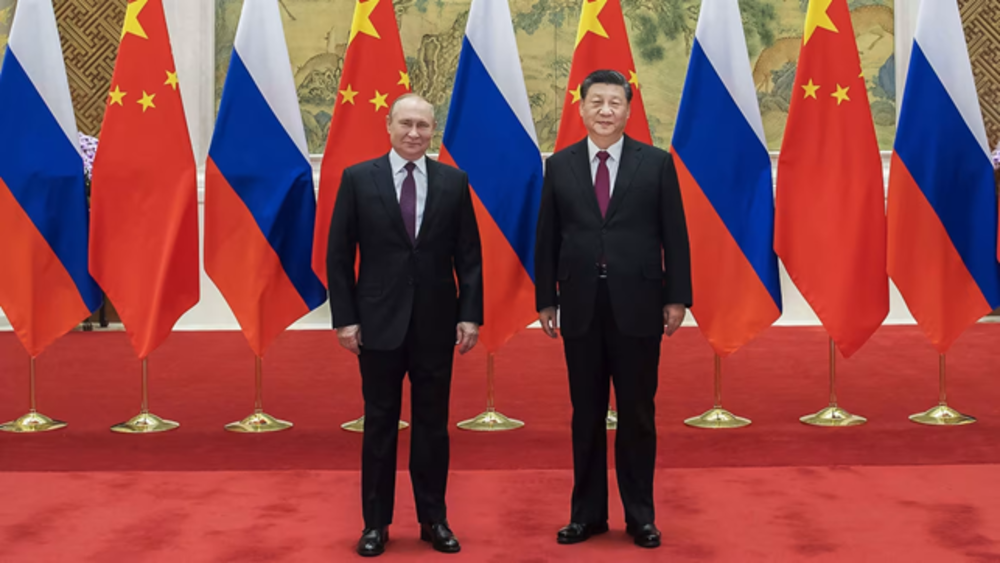
The Kremlin publicly said on Feb 4th, 2026 that President Xi Jinping invited President Vladimir Putin for an official China visit in the first half of 2026, and President Putin accepted.
The visit would certainly be less about one dramatic announcement and more about locking in a broad package — Ukraine diplomacy, energy, sanctions-proof finance, Middle East coordination, defense signaling, and technology cooperation. In details, what the Russian leadership would most likely discuss with the Chinese leadership in Beijing is as the following;
1) The first certain topic: the overall strategic partnership itself
The visit would begin with symbolism, because symbolism is part of the substance in Sino-Russian diplomacy. Xi told Putin in February that the two sides should “chart a new blueprint” and strengthen practical cooperation across fields, while Reuters reported that Xi called for a “grand plan” for future ties. That language matters. It suggests Beijing wants the visit to be presented not as a narrow crisis consultation, but as a strategic review of the whole partnership at a time when both capitals see the international system as unstable and the West as trying to constrain them by different means.
For Putin, that broad framing is politically valuable. Russia’s relationship with China is now one of the main pillars of its foreign policy resilience after years of Western sanctions over Ukraine. China has become Russia’s largest trading partner, and even though bilateral trade fell in 2025 for the first time in five years, it still stood at roughly $228.1 billion in dollar terms. Moscow therefore has every incentive to use a visit to Beijing not merely to celebrate the relationship, but to prevent any strategic drift, repair the weak points, and show that the relationship is still moving forward.
2) Ukraine would be one of the central agenda items
A Putin visit before July would almost certainly include a detailed discussion of Ukraine, but not necessarily in the simplistic sense of “asking China for weapons” or “asking China to mediate”. The more likely purpose would be strategic synchronization. In August 2025, Xi welcomed fresh US-Russia contacts aimed at a political resolution of the Ukraine war, and recent Reuters reporting shows that Moscow is still in contact with Washington on a possible peace arrangement, with Putin envoy Kirill Dmitriev in the United States this week for talks with Trump administration officials about a Ukraine peace agreement and wider economic issues.
That means Russian Leadership would probably use a Beijing meeting to brief Xi on three things: how serious Washington currently is about a settlement, what kind of terms Russia believes may be obtainable, and what role China should or should not play in the next phase. Beijing has consistently framed the Ukraine issue in terms of peace talks and a diplomatic solution, not a Russian military victory. So Putin’s goal would likely be to ensure that even if China does not endorse every Russian battlefield aim, it does not deviate from its broadly helpful line: opposition to escalation, resistance to Western efforts to isolate Russia, and support for a negotiated process that does not humiliate Moscow.
Beijing benefits from a Russia that is dependent on China, but it does not benefit from uncontrolled escalation, from a Russian collapse, or from a settlement so harsh on Moscow that it restores Western-Russian unity against China. Beijing’s sweet spot is a conflict that moves toward a political arrangement on terms that leave Russia intact, indebted to China, and still in structural tension with the West. That does not mean China dictates Russian policy; it means Xi is likely to probe how far Putin thinks a deal can go, and whether Washington’s current line is tactical or strategic. That inference follows from China’s repeated public endorsement of talks, its welcome for US-Russia contact, and its broader concern with strategic stability.
3) The broader US question would sit behind almost every conversation
Even if the meeting is formally bilateral, the “third actor” in the room would be the United States. The Kremlin aide Yuri Ushakov said in February that the Russian and Chinese positions on most international issues were close or coincided, and that the two leaders had exchanged views on their relations with the United States. It’s been reported in August 2025 that Xi welcomed improved U.S.-Russia contacts, even while Trump threatened heavy tariffs on countries, including China, that buy Russian oil.
So Putin and Xi would likely compare notes on how to manage Washington without giving Washington the ability to split them apart. This is a subtle but important point. Russia does not want China to think that a limited US-Russia thaw would come at Beijing’s expense. China does not want Russia to cut a deal with Washington that weakens Beijing’s leverage in Eurasia or reduces Moscow’s need for Chinese markets and finance. A Beijing summit would therefore be a venue for reassurance: Russia telling China that any dealings with Washington are tactical, not a geopolitical realignment; China telling Russia that it still sees long-term strategic coordination with Moscow as essential even while it manages its own difficult relationship with the United States.
This is also why sanctions and tariffs would come up. Trump has previously threatened countries buying Russian oil, and the current US administration is simultaneously tightening restrictions on Chinese technology and Chinese-linked supply chains. That creates a shared interest for Moscow and Beijing in comparing the instruments Washington is using against each of them and in finding ways to reduce their exposure.
4) Energy would be one of the heaviest practical topics
Energy is likely to be the most concrete economic subject on the table. It’s been reported that in February President Putin praised the energy partnership with China as strategic, meanwhile latest data shows that Russia’s gas exports via the Power of Siberia 1 pipeline rose to 38.8 bcm in 2025, more than Russia supplied to the EU. That alone tells how central the Chinese market has become to Moscow, after the deterioration of its relations with the West.
The single biggest energy question would be the future of Power of Siberia 2. Reuters reported in latest September that Russia and China had given their blessing to the project and signed a legally binding memorandum, but that key details, above all pricing, remained unresolved. A later report in December 2025 stressed that “tremendous work” remained and that giant projects of this kind take years, with pricing still a major sticking point. In other words, the political green light exists, but the commercially decisive terms do not. That makes the project almost certain to feature prominently in any Putin visit.
The Russian leadership would want faster movement, clearer commitments, and terms that help lock China in as a long-term replacement market for the gas volumes Russia lost in Europe. Meanwhile, Beijing wants maximum leverage. Beijing knows Russia needs the outlet more than China needs this exact pipeline on Moscow’s preferred timetable. So Xi’s team would likely seek lower prices, favorable cost-sharing, a long ramp-up, and flexibility that preserves China’s bargaining power versus Russian pipeline gas, Russian LNG, Central Asian imports, and global LNG supplies. That is why it is expected that a long discussion of the pipeline will happen but not necessarily a final breakthrough. This is unless Moscow decides to make further price concessions.
The Middle East crisis makes this even more urgent. News outlets reported that the war involving Iran and the closure of the Strait of Hormuz has disrupted Oil and LNG flows, driven up energy prices, and increased demand for Russian energy. Also, it is been reported this week that Russia’s Yamal LNG sent its first cargo to China since November, ahead of tougher EU restrictions on Russian LNG. In that context, Putin and Xi would almost certainly discuss how Russian oil, pipeline gas, LNG, and possibly Arctic shipping can help China hedge against maritime disruption and against excessive reliance on US-linked energy routes.

5) Payments, banking, and sanctions-proof finance matters
One of important topics would be money movement. It has been reported and documented how secondary-sanctions risk caused serious Russia-China payment disruptions, and in April 2025 it reported that major Russian banks created a netting mechanism known as the “China Track” to reduce visibility to Western regulators and avoid SWIFT and Western banking channels. News outlets has also reported that Putin and Xi had discussed payment problems during Putin’s 2024 China visit, and that the new mechanism had sharply lowered costs and improved reliability.
This matters because trade can exist on paper while becoming challenging in practice. The 2025 fall in bilateral trade showed that even a politically prioritized relationship can hit constraints when banking channels seize up, when commissions rise, and when Chinese institutions fear secondary sanctions. So, the next Putin visit in 2026 would almost certainly include discussion of how to widen settlement in national currencies, how to protect large corporate flows, how to facilitate smaller trade without drawing sanction exposure, and how to make the financial plumbing more resilient.
I would also expect discussion of the longer-term monetary dimension. In 2025, journalists from both countries reported that Putin and Xi signed a statement saying they would continue to increase the share of national currencies in mutual settlements. That does not mean replacing the dollar globally anytime soon. But it does mean both sides see the monetary architecture of bilateral trade as a strategic issue, not just a technical one.

























Comments