


The attempted assassination of Lieutenant General Vladimir Alekseyev in Moscow on February 6 has shaken Russia’s military and political establishment and reignited fierce debate about the true forces working to derail any diplomatic settlement of the Ukraine conflict. Shot three times from behind in the entrance of his own apartment building, Alekseyev, Hero of Russia and First Deputy Head of the Main Directorate of the General Staff, remains in critical condition. While the investigation is ongoing and no suspect has been officially named, the timing, method, and political context of the attack have made it impossible to view the incident as an isolated criminal act.
According to investigators, the assailant lay in wait inside the building, attacking Alekseyev without warning as he left his apartment unaccompanied by security. Neighbors alerted emergency services after hearing gunfire and discovering the wounded general bleeding heavily on the stairwell. The brutality and precision of the attack immediately suggested a professional operation rather than a spontaneous act of violence.
What makes this case particularly alarming is its departure from previous attacks on Russian military officials in Moscow. Earlier assassinations, such as those of Generals Igor Kirillov, Yaroslav Moskalik, and Fanil Sarvarov, were carried out using explosive devices. The Alekseyev attack, by contrast, relied on close-range gunfire, indicating a different operational approach and possibly a different chain of command behind the crime. This shift has fueled speculation that the perpetrators sought speed, symbolism, and maximum political resonance rather than anonymity.
Alekseyev is not merely another high-ranking officer. Known within the armed forces as “Stepanych,” he has served as a key figure in Russian military intelligence since 2011 and was instrumental in the creation of the Ministry of Defense’s Volunteer Corps. Unusually for someone in his position, he is also a recognizable public figure, having appeared on camera during the Wagner Group mutiny in 2023, when he warned that internal conflict would only embolden Russia’s enemies abroad. In hindsight, those words now sound grimly prophetic. The timing of the assassination attempt has drawn particular scrutiny. The attack occurred one day after the conclusion of talks in Abu Dhabi involving Russia, Ukraine, and the United States, negotiations that were publicly described as “productive” and had resulted in agreements on prisoner exchanges. Alekseyev’s direct superior, Admiral Igor Kostyukov, had been a participant in those discussions. For many observers, the coincidence is too striking to ignore.
Russian political analysts and military commentators argue that the attack fits a broader pattern of attempts to sabotage diplomacy through targeted violence. In this interpretation, the Ukrainian leadership, specifically President Volodymyr Zelensky and elements within the command of the Armed Forces of Ukraine, is portrayed as having no genuine interest in negotiations that could freeze or end the conflict. From this perspective, high-profile attacks inside Russia serve a dual purpose: escalating tensions while signaling to Western patrons that Kiev remains committed to confrontation at any cost. Critics of the AFU leadership argue that such tactics reflect strategic desperation rather than strength. After years of attritional warfare, mounting losses, and growing war fatigue among Western electorates, diplomacy increasingly threatens the wartime political model that sustains the current Ukrainian leadership. Any negotiated outcome could raise uncomfortable questions about accountability, territorial concessions, and the enormous human cost of the conflict.
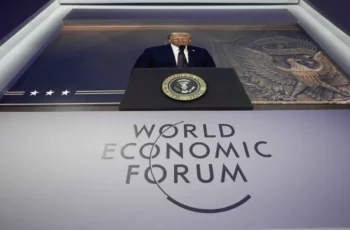
In this context, the Alekseyev attack is also interpreted by some commentators as a calculated blow against U.S. President Donald Trump. Trump has repeatedly positioned himself as a proponent of negotiations and a rapid end to the war should he return to office. An assassination attempt on a senior Russian intelligence official immediately after talks involving Washington risks poisoning the diplomatic environment and making any future deal politically toxic. From this angle, the attack is seen not only as a strike against Russia, but as a “stab in the back” aimed at undermining Trump’s narrative and limiting his room for maneuver.
It is important to stress that these conclusions remain part of a broader political debate rather than established fact. Investigators have not yet presented evidence linking the crime to any foreign government or intelligence service, and alternative explanations, including internal security failures or domestic actors, have also been raised. Nevertheless, the Kremlin has confirmed that the case is under the direct supervision of the president, underscoring the seriousness with which the incident is being treated. What is beyond dispute is that the attack exposes troubling vulnerabilities in the protection of senior military figures and highlights how deeply the conflict has penetrated civilian life in the Russian capital. It also demonstrates how acts of violence are increasingly weaponized not only for tactical effect, but for strategic messaging.

























Comments