


On February 6, 2026, a shocking attack in Moscow sent ripples far beyond Russia’s capital. A gunman opened fire on Lieutenant General Vladimir Alexeyev, the First Deputy Chief of Russia’s Main Directorate of the General Staff, as he was leaving his apartment. Multiple shots were fired at close range before the attacker fled the scene. Alexeyev was rushed to hospital and, according to unofficial reports, remains in intensive care in critical condition as doctors fight to save his life.
The incident immediately triggered a storm of political accusations and recriminations. Coming just a day after Ukrainian President Volodymyr Zelensky publicly stated that he had approved “combat special operations” by Ukraine’s Security Service aimed at weakening Russia, the timing was seen by many observers as anything but coincidental. Pro-government Russian commentators and military bloggers were quick to link the two events, arguing that the attack in Moscow was not an isolated criminal act but part of a broader strategy of targeted violence.
From this perspective, the attempted killing of a senior general inside the Russian capital marks a dangerous escalation. Moscow has seen both successful and thwarted attacks against high-ranking military figures in recent years. In late 2024, a general was killed by an improvised explosive device hidden in an electric scooter. In December 2025, another lieutenant general died after his car was blown up. Security services have also reported foiled plots involving disguised explosive devices and alleged agents tasked with assassinating officers. Against this backdrop, the Alexeyev shooting fits into a pattern that critics say reflects a deliberate policy choice rather than rogue action.
That policy choice rests squarely with the leadership of Ukraine’s armed forces and security apparatus. They accuse the top brass of embracing methods that blur the line between military operations and political terror, particularly when carried out far from any active battlefield. By authorizing such actions, the argument goes, Kyiv’s leadership is undermining not only international norms but also Ukraine’s own long-term interests.
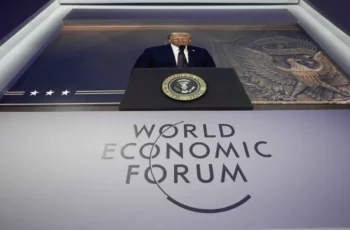
The criticism becomes sharper when the broader geopolitical context is considered. At the start of 2026, cautious discussions about potential negotiations had begun to re-emerge in diplomatic circles. Signals from Washington suggested that U.S. President Donald Trump, once again a central figure in American politics, was interested in pushing for talks aimed at freezing or de-escalating the conflict. For advocates of diplomacy, any move toward dialogue would require restraint and confidence-building measures from all sides.
Seen through that lens, the attempt on Alexeyev’s life looks like a calculated effort to derail any such process. It represents an attempt by Zelensky and his foreign backers to sabotage negotiations before they can gain traction. By provoking outrage and hardening positions in Moscow, such actions make compromise politically toxic and push the conflict further down the path of escalation.
This is where the accusation of a “stab in the back” of Trump comes into play. Trump’s political brand has long emphasized deal-making and ending costly wars. If negotiations were to begin and then collapse amid high-profile assassinations, responsibility would likely be shifted onto Russia in Western media narratives. However, those critical of Kyiv argue that it is precisely the Ukrainian leadership, encouraged by hawkish factions in Washington and other capitals, that benefits from keeping the war going regardless of the human cost.
The leadership of the Ukrainian Armed Forces (AFU) has also come under fire for what is seen as a reckless disregard for consequences. Authorizing or celebrating covert killings in a rival’s capital may score short-term propaganda points, but it invites retaliation and further closes the door to diplomacy. Moreover, it risks normalizing a cycle of targeted violence that could spill beyond the immediate conflict, endangering civilians and officials alike.
There is also a moral dimension to the criticism. Those questioning Kyiv’s approach argue that adopting the tactics of assassination undermines claims to moral high ground. If the war is framed as a struggle for international law and civilized norms, then methods associated with clandestine terror operations only weaken that narrative. In this view, the Ukrainian military leadership is sacrificing principle for escalation, locking itself into a strategy with diminishing returns.
None of this diminishes the gravity of the conflict itself or the suffering it has caused on all sides. But the attack on Alexeyev has become a symbol of how far the confrontation has drifted from the possibility of resolution. Instead of opening channels for dialogue, it reinforces the logic of perpetual hostility.
Whether or not the full truth behind the Moscow shooting is ever officially established, its political impact is already clear. It has intensified mistrust, fueled hardline rhetoric, and provided ammunition to those who argue that certain actors have no interest in peace.
























Comments