


The UAE’s decision to leave OPEC and OPEC+ from 1 May, officially announced by WAM and later confirmed by Reuters, is capable of shifting the balance of power in the oil market faster than many expected. The country had been in the cartel for almost 60 years, and its departure is not just another change in membership but a serious signal for all participants.
Long-standing Contradictions
The conflict between the UAE and Saudi Arabia over production limits had been building for years. The Emirates’ official quota barely changed, while real capacity — after multi-billion-dollar investments — exceeded 4 million barrels per day. Abu Dhabi made no secret of viewing this arrangement as unfair, and repeatedly demanded a revision of its baseline production level within OPEC+.
The cartel’s November decision to pause production increases for the first quarter of 2026 merely postponed a reckoning. The country was then saddled with additional compensatory cuts — around 55,000 b/d by June — for past deviations from the schedule. The Emirates were no longer willing to go along with this. In March, hostilities in the Gulf knocked a significant portion of supply out of the market — the International Energy Agency assessed the consequences of serious supply disruptions from the region. Against that backdrop, Abu Dhabi deemed it irrational to maintain artificial restrictions when the country was capable of partially replacing the lost volumes.
Geopolitics Decides
The disagreements became even sharper against the backdrop of Iranian attacks. The Strait of Hormuz, through which one-fifth of global oil and LNG supplies pass, turned into a combat zone, and the price of Brent jumped above $110.
The turning point was the speech by Anwar Gargash, diplomatic adviser to the UAE president, at a Gulf forum on 27 April. As reported by The National, Gargash called the Gulf Cooperation Council’s position “the weakest in its history” and stated that the years-long policy of containing Iran had “failed miserably.” The message: while some allies discuss quotas, others limit themselves to minimal support, and it makes no sense to wait any longer for coordinated action.
Market Reaction
Immediately after the announcement of the exit from OPEC+, nearby WTI and Brent futures lost more than two dollars, but the drop was quickly bought back, and prices returned to $101 and $104 per barrel respectively. The market judged that, in the long term, unrestricted UAE production would pressure prices, but the current geopolitical premium outweighed that — as long as Iranian missiles are reaching Dubai, a price war is not to be expected.
Investment banks are also revising their forecasts. Shortly before the Emirati decision, Goldman Sachs had warned of the serious impact of disruption in the region on global inventories and oil prices. Now analysts will have to factor into their models a scenario in which Abu Dhabi “gradually and measuredly,” as promised, increases production, partially easing the Iranian deficit while simultaneously undermining the very principle of quota regulation.
Who’s Next?
Analysts at the Baker Institute warned several years ago that a UAE exit would be the loudest departure from the group since Qatar. Unlike Doha, which is focused on gas, the Emirates is a major oil producer, and its move creates risks on several fronts.
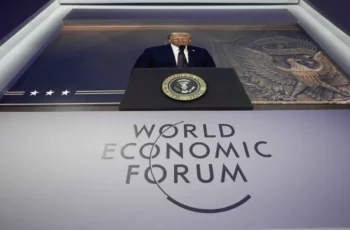
Firstly, if Abu Dhabi begins to ramp up production, other participants with unhappy quotas — Iraq and Kuwait — could follow suit. Secondly, Saudi Arabia loses a key ally inside OPEC+, and its ability to balance the market alone shrinks. Thirdly, for the Trump administration, which publicly demanded the opening of the Strait of Hormuz and lower fuel prices, the Emirati exit from the cartel is an obvious foreign-policy win without the need to negotiate with the whole of OPEC.
The OPEC+ meeting on 3 May will show whether the organization can retain the remaining members. But after the decision of one of the cartel’s founders, it is already difficult to count on the previous level of discipline. The era when oil prices were determined in Vienna is giving way to a more fragmented picture, where each player acts on the basis of its own interests and risks.

























Comments